
THE TEXAS HUNTING GUIDE · HOG HUNTING
Thermal vs. Night Vision for Hog Hunting. What Is the Difference?
Two different ways to see after dark and what each means for your night in the field.
By Texas Thermal Outfitters · Graham, Texas
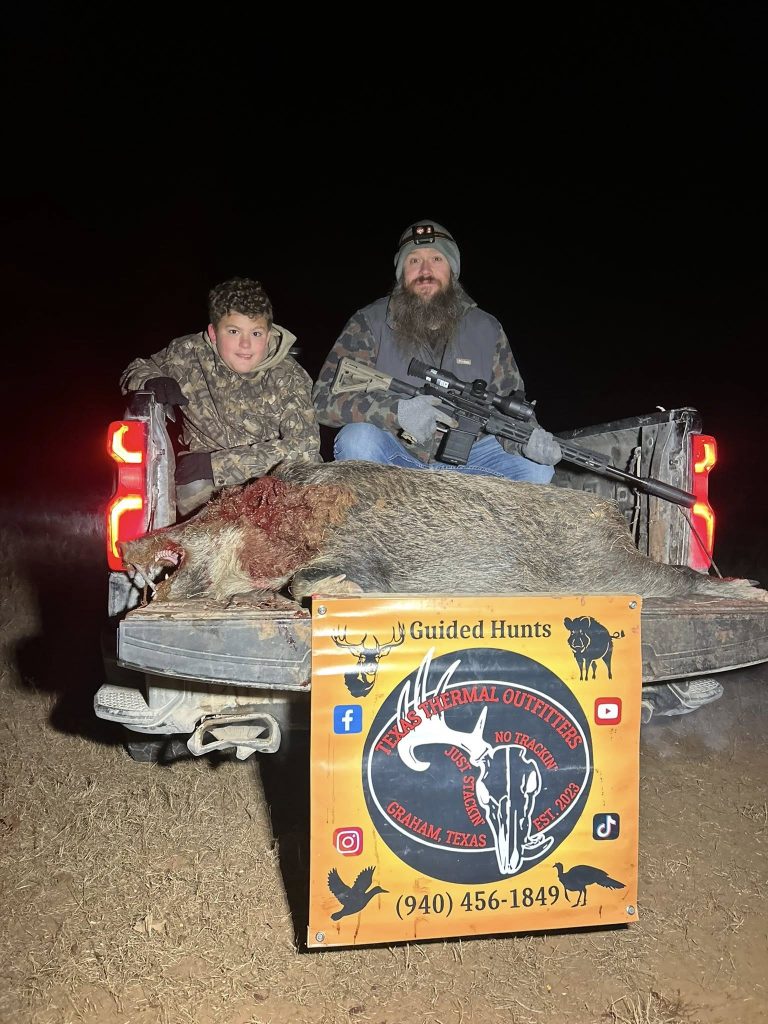
Thermal imaging detects differences in infrared energy, while night vision forms an image from available light or infrared illumination. For hog hunting, thermal is useful for noticing animals against their surroundings. Night vision can provide a more familiar view of a scene. Neither replaces positive animal identification or knowledge of what lies beyond it.
How the two technologies create a picture
The words “thermal” and “night vision” often get used interchangeably, but they describe different systems. Image-intensified night vision amplifies available light. Digital night vision uses an electronic sensor and may rely on an infrared illuminator when ambient light is low. Thermal imagers build their picture from infrared energy rather than a reflected-light view.
That difference changes the experience at the eyepiece. A thermal display uses contrast and a selected color palette to show the scene. A night-vision image tends to show reflected features such as surfaces and outlines in a way that feels closer to ordinary vision. FLIR explains the underlying technology here.
Thermal and night vision compared
| Question | Thermal imaging | Night vision |
|---|---|---|
| What creates the image? | Infrared energy differences | Available light or active infrared illumination |
| Does it need visible light? | No | Performance depends on the system and illumination |
| What can draw attention? | Contrast between animals and background | Reflected scene detail |
| Does it see through solid cover? | No | No |
| Is a visible shape enough to identify an animal? | No | No |
Detection is different from identification
Finding a shape and knowing what that shape is are separate steps. A bright spot on a screen is an observation to investigate. It is not proof that an animal is a hog, and it does not establish a safe background. Size, outline, movement, distance, obstructions, and the surrounding scene all matter.
For a guest, the useful question is not “How far can this device detect heat?” Ask how the guide distinguishes an animal and explains what you are looking at. Advertised detection distances should never be treated as a personal operating distance. If you cannot follow what the guide is describing, say so and wait.
Weather, brush, and glass still matter
Thermal is not an X-ray view. Solid vegetation can hide an animal, and ordinary window glass interferes with the view of thermal equipment commonly used outdoors. Rain, fog, humidity, and reduced temperature contrast can affect useful detail. Night vision also changes with lighting and environmental conditions.
An impressive recording is not a promise that every night will look the same. Ask to become familiar with the equipment before entering the field. Learn how the display looks at normal settings, keep the equipment under the guide’s direction, and avoid experimenting with unfamiliar controls during an active observation.

Which is better for a first guided hog hunt?
Choose the guided experience and preparation process before worrying about owning a particular optic. An outfitter should explain the equipment being used, give you a chance to get comfortable with it, and set clear communication expectations. You do not need to buy a thermal device simply to understand the technology.
Review Texas Thermal Outfitters’ thermal hog hunts and what to expect on your first thermal hog hunt. Before packing personal equipment, confirm what is supplied and what the guide approves. The goal is a coordinated evening with equipment everyone understands.
Common Questions About NV Optics VS Thermals
KEEP EXPLORING
More from the field


The Evolution of Thermal Hunting
See how thermal technology changed hog hunting in Texas.