
THE TEXAS HUNTING GUIDE · HOG HUNTING
Why We Use Thermal Imaging for Texas Hog Hunts
What thermals for pigs adds to a guided night hunt, and why experienced judgment still matters.
By Texas Thermal Outfitters · Graham, Texas
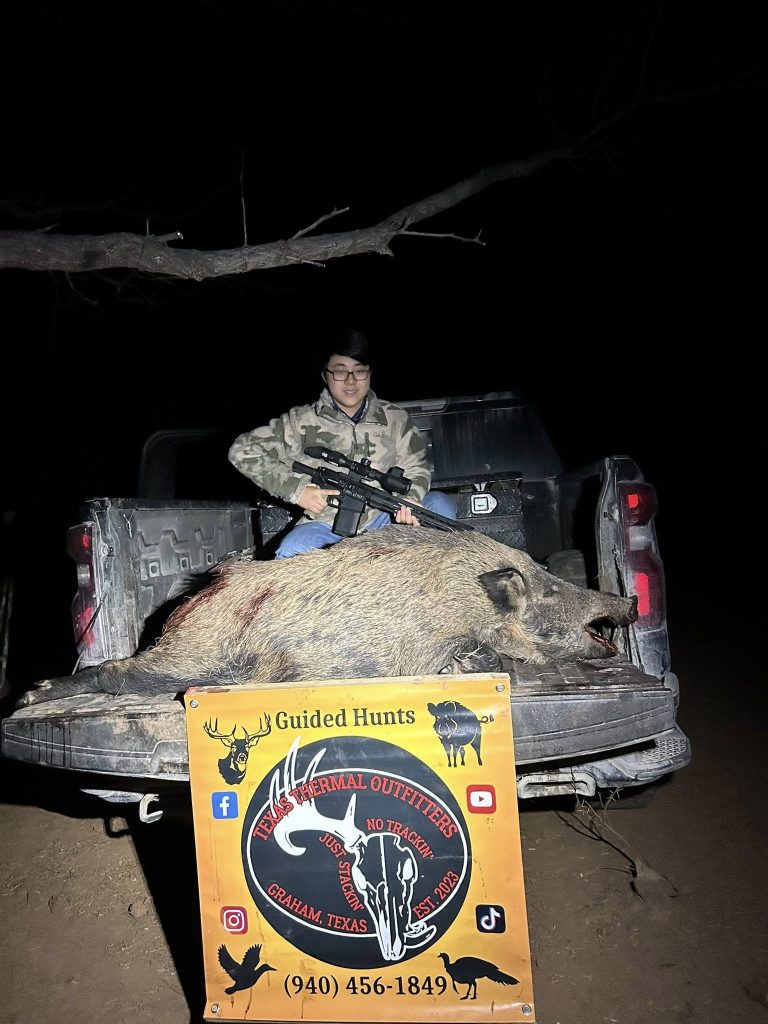
Thermal imaging fits nighttime hog hunting because it produces a view without relying on visible light and helps draw attention to temperature differences in the landscape. At Texas Thermal Outfitters, thermal is part of a guided experience. Not a substitute for identifying animals, understanding the property, and communicating clearly.
Why thermals for pigs.
A dark field looks very different through an electronic display. Thermal can make some animals stand out from their surroundings, giving the guide another way to observe a scene. Its value comes from that contrast, together with the guide’s ability to interpret what appears on the screen.
Thermal equipment supports observation in darkness, but a display is only one part of the picture. Property knowledge, access, wildlife movement, and the condition of the ground still shape an evening. For the basic technology distinction, see FLIR’s explanation of thermal imaging and night vision.
What most hog hunters notice first.
First-time users often expect the screen to resemble a daylight photograph. Instead, the view uses a palette to represent infrared differences. A warm object can appear bright in one setting and dark in another. The chosen palette changes the presentation rather than changing the identity of the object.
Use the pre-hunt briefing to get comfortable with the display. Ask about fit and focus, describe any vision concerns, and be honest if you cannot see what is being explained. There is no benefit in pretending the view is clear. Familiarity before the evening starts makes instructions easier to follow later.
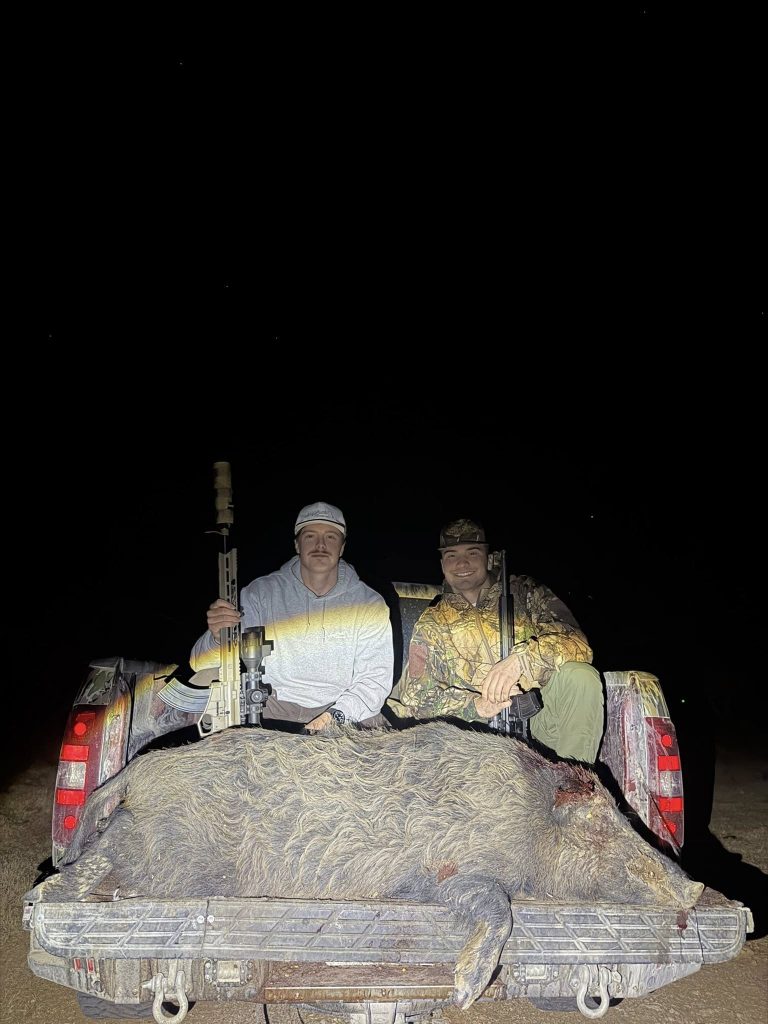
What thermal optics do not solve.
Equipment cannot promise that hogs will be present or visible. Animals can stay out of view, leave the property, or be obscured by cover. A screen also cannot establish land boundaries or tell you that an unseen background is safe. Those remain matters for property knowledge and deliberate judgment.
Weather and image quality can change what is useful to observe. A recording from a different evening is not a standard your hunt must match. Treat a guide’s decision to wait, relocate, or stop as part of responsible field judgment, rather than as a failure of the technology.
How to prepare for thermal hog hunts without buying extra equipment.
Start with the booking details. Ask your hog hunting outfitter which equipment is supplied, whether any familiarization takes place before departure, what personal protection to bring, and whether the planned outing suits everyone in your group. Confirm your upcoming hunting arrangements for anyone with hearing, eyesight, or mobility needs.
Pack comfortable layers, dependable boots, water, and the personal essentials agreed with the team. Keep the load easy to manage. Our hog hunt packing guide covers the travel side, while the first-hunt guide explains arrival and briefing expectations.

The hog hunting guide is still the most important part.
The useful benefit of a guided thermal hunt is the combination of access, equipment familiarity, and someone coordinating the outing. Listen to instructions about movement, communication, and handling equipment. Stop and ask whenever the situation or an instruction is unclear.
If you are comparing trips, ask about the experience you are actually booking: group arrangements, time in the field, equipment, weather decisions, lodging, and after-hunt plans. Review TTO’s thermal hog hunt information and contact the team to confirm the details for your dates. Wildlife encounters and harvest are never guaranteed.
Common questions
KEEP EXPLORING
More from the field


The Evolution of Thermal Hunting
See how thermal technology changed hog hunting in Texas.